POS Buying Guide: How to Choose the Right Vendor in 2026
Out with the old and in with the new, they say. Does that apply to your POS plans for the new year?
Recent research suggests plenty of businesses are thinking that way. According to one survey from the restaurant industry, 44% of leaders plan to upgrade or expand their current POS in 2026, making it the joint top priority when it comes to POS related investments.
What shares top spot? Replacing their existing POS with a new one entirely. With a different vendor.
This last part is important. Not only is POS technology continuing to evolve apace, but the strategic importance of POS is advancing, too. Long gone are the days when a POS system was simply there to process sales. Today’s POS systems act as a hub for multiple digitized operations, they provide an invaluable conduit for collecting essential data, and they play a central role in creating the right customer experience, too.
Joined-up operations, data, CX – three watchwords of the agile modern business. And POS has a role to play in them all. That explains why business leaders are keen to move forward with upgrading their POS. It also explains why so many are on the look out for new and better POS partners. Better partner equals better POS equals a better foundation for taking your business forward in 2026.
So with that in mind, we’ve put together this four-point guide for choosing the right POS vendor to meet your needs
1. Choose a solution specialist, not a box shifter
Allow us to ask you something. The last place you bought a POS from, did you get the impression they were really interested in trying to help you move forward as a business, understanding what you needed, and putting a lot of energy into giving you the right solution? Or were they just selling you terminals?
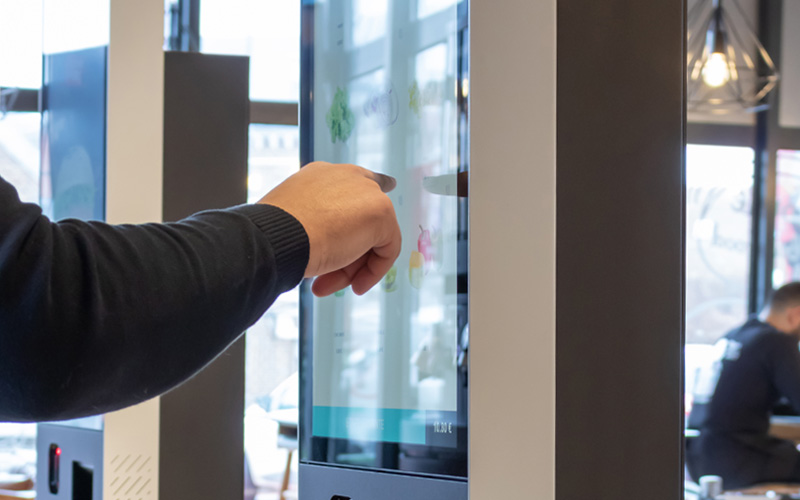
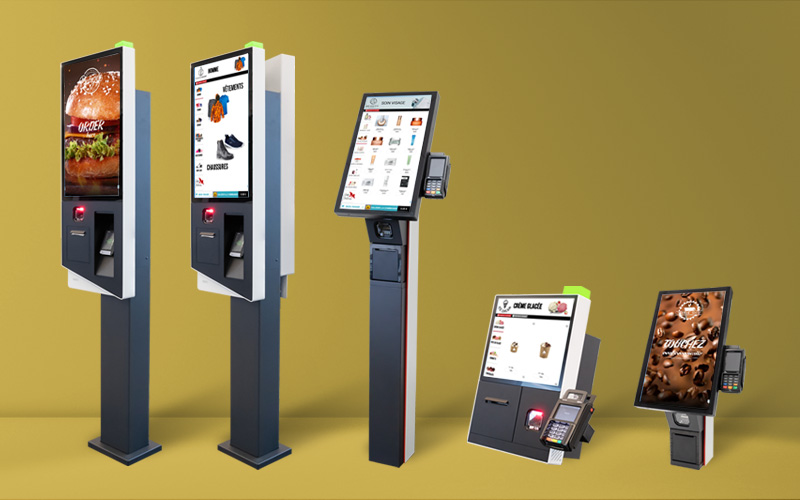
In 2026, find yourself one of those vendors that treats POS as a solution, not just a product. A solution-centric partner will start with your current set up, your workflows, your business goals and pain points. And then suggest a mix of POS options (terminals, kiosks, tablets, screens, payment devices) and services that can serve your needs. At RTG, we pride ourselves on being a one-stop POS service, combining product, staging, logistics, field services and 24/7 support so you get an end-to-end solution rather than a pile of hardware and a promise.
2. Check integration credentials
Integration, integration, integration. That’s what everyone is talking about in POS circles these days. That survey we mentioned above? It found 90% of leaders saw better integration as their top strategic goal for POS in 2026. What that means is that people no longer view POS as a standalone system. It’s that hub idea we already mentioned, routing everything through POS to create a single unified stack.
So when you compare vendors, don’t just look at spec sheets. Ask about real-world experience integrating hardware estates, across multiple locations if necessary, how they stage and test systems before rollout, and how they’ll keep everything interoperable as you add new channels and sites.
3. Put security first
Every POS endpoint you add to your estate expands the potential attack surface for cybercriminals. One of the major reasons businesses are looking for new partners as they aim to grow their POS systems is because they realise they need to scale their defences accordingly. And they need the right support to do that. Security has to be a design principle, not an afterthought. Your POS partner should be using secure key management for payment devices, and providing an explicit incident response plan that covers both hardware and software. Ask how they harden endpoints, manage patches across large estates and segregate networks in store. The goal is simple: protect customer data without slowing down the checkout experience.
4. Demand accountability
Transaction speed and uptime should be treated non-negotiables in modern POS systems. That doesn’t mean nothing will ever go wrong, of course. What matters then is the support you will get and the level of accountability your partner will take. Look for clear SLAs for latency, availability, onsite response times and repair & replacement services. A credible POS hardware partner will back this up with proactive monitoring, a structured staging process to reduce failures in the field, and a 24/7 support centre so issues don’t linger until the next business day.
So to summarize – choosing a POS system in 2026 isn’t about chasing the latest gadget. It’s about finding a solution that lays a foundation for the further digital evolution of your business. To get that, you need to find a POS partner who can design, deploy and support a secure, data-driven system built on reliable hardware – and who is willing to be held accountable for outcomes, not just installations.
Want to find out more? Why not make RTG the first stop on your search, and find out how we can serve your business in 2026, but as a long-term strategic partner.

KEEP IN TOUCH
NEWSLETTER SIGN UP
| Products | Customer Portal | Contact | About Us |
1859 Bowles Ave, Suite 107
Fenton, MO 63026